AI Film Creation in 2026: Why Directors Are Building Full Pipelines Instead of One-Off Clips

Redação DM
Publicado em 30 de julho de 2026 às 08:09 | Atualizado há 2 meses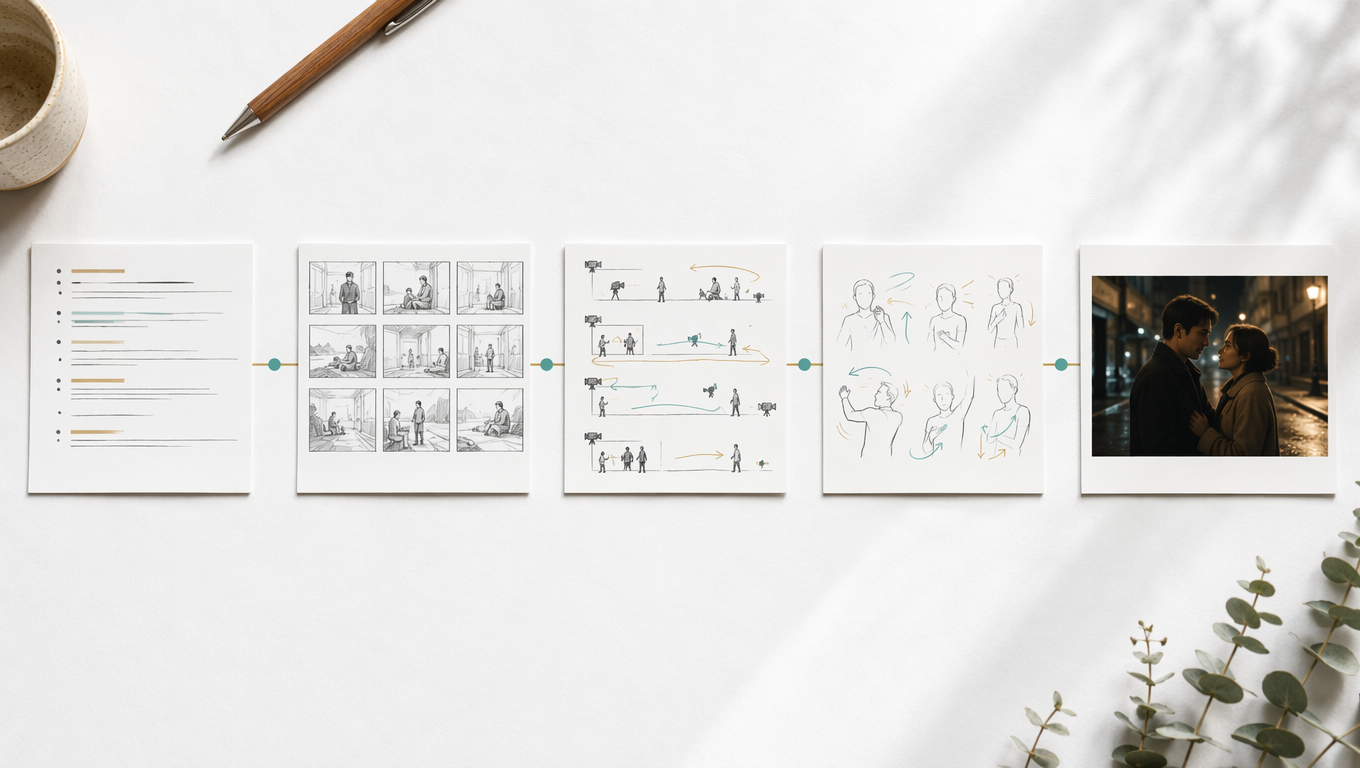
The AI film conversation in 2026 has shifted. A year ago, the flex was generating a cinematic 8-second shot. Now the flex is finishing a sequence — with story intent, boarded frames, camera language, and performance direction that still feels authored by a human.

That is the real dividing line in AI filmmaking today. Clip generators can decorate a feed. Film pipelines can carry a scene from idea to motion without the director losing the plot between tools.
Why One Beautiful Shot Is No Longer Enough
Audiences can tell when a “film” is just a stack of disconnected generations. Lighting drifts. Characters mutate. Camera grammar resets every cut. The result looks impressive in isolation and broken in sequence.
Serious creators are responding with a different operating model:
- Lock the story beat first
- Visualize the board before spending on motion
- Decide camera and performance intent upstream
- Generate cinematic scenes only after the plan is clear
In other words, AI film is becoming a director’s medium again — not a prompt lottery.
When that workflow needs to live in one place, an AI Film Studio like Topview’s connects story development, storyboards, camera planning, performance direction, and cinematic scene generation in a single creation path. The point is not to replace the director. It is to keep the director in charge while AI creates the images and motion for each AI film.
Creative Patterns Defining AI Films Right Now
1. Storyboard-First Previsualization
The winning teams no longer jump straight to video. They approve still boards first — composition, wardrobe, location language, emotional beat — then animate only the frames that survive review. Previs becomes production input, not a discarded sketch.
2. Camera Planning Before Generation
Lens, angle, move, and coverage are being treated as creative decisions again. Wide establishing shot, push-in, over-the-shoulder, insert — planned as a shot list, not discovered after twenty random regenerations.
3. Performance Direction as a Separate Layer
Dialogue timing, gesture energy, and character presence are no longer left entirely to chance. Directors specify performance intent before asking a model to invent motion, which keeps scenes emotionally readable across cuts.
4. Multi-Shot Continuity Over Single Hero Clips
Trailers, short films, and cinematic ads need continuity across beats. The current craft standard is building sequences with recurring characters, locations, and visual grammar — not collecting unrelated “wow” shots. When motion quality has to hold across those beats, many directors route cinematic scene generation through engines such as Seedance 2.5 after the board and camera plan are locked.
5. Commercial and Narrative Hybrids
Brand films, product stories, and micro-dramas are converging. The same AI film pipeline now supports both narrative beats and commercial clarity, as long as story and camera stay intentional.
6. Director-Led Iteration Loops
The fastest teams iterate like a set: revise the board, adjust camera notes, regenerate one beat, keep the rest. That is closer to filmmaking than to chat-based prompting. An AI Canvas helps here by keeping storyboards, references, and generated shots in one visual workspace, so each revision stays connected to the rest of the sequence.
What a Modern AI Film Pipeline Looks Like
A practical 2026 pipeline usually follows five connected stages:
| Stage | Director focus | AI contribution |
| Story development | Theme, beats, conflict | Draft structure and scene options |
| Storyboards | Visual language and continuity | Concept frames and board variants |
| Camera planning | Coverage, lens, movement | Shot options aligned to the board |
| Performance direction | Emotion, pacing, presence | Guided motion and expression |
| Cinematic scene generation | Final shot selection | Image and motion creation |
If any stage is missing, quality usually collapses in the edit. Beautiful generation cannot rescue a film that was never boarded or blocked. In practice, teams often develop and review assets on canvas, then push approved beats into higher-fidelity motion models for the final cinematic pass.
Platform Notes for Different Film Goals
Short cinematic social films
Keep sequences tight. Favor clear boards, strong first-frame hooks, and camera moves that read on mobile. Continuity still matters, but pacing should stay aggressive.
Trailers and brand films
Invest more in camera planning and performance notes. These formats punish identity drift and random lighting changes. A connected studio workflow pays off here.
Narrative shorts and micro-dramas
Treat story development as non-negotiable. Multi-shot continuity, recurring locations, and character presence decide whether viewers feel a story or a montage of demos.
How to Choose Your AI Film Approach
Ask four questions before you generate anything:
- Do I need a clip or a sequence? One shot can live in a playground. A sequence needs a studio workflow.
- Have I locked visual references? Character and location consistency starts before video generation.
- Is camera language intentional? If every shot is “cinematic” with no coverage plan, the edit will feel random.
- Am I directing performance? Motion without emotional intent rarely survives a second viewing.
If your answers point toward multi-stage creation, a connected film studio beats hopping between disconnected generators.
A Practical Workflow Creators Are Standardizing
The pattern showing up across AI film teams looks like this:
- Develop the story beat and scene objective
- Generate and approve storyboard frames
- Mark camera intent for each beat
- Add performance direction notes
- Generate cinematic scenes from the approved plan
- Iterate only the weak shots, keep the strong ones
That loop is why directors are moving away from “prompt until it looks cool” and toward production discipline inside AI tools.
Common Failure Modes to Avoid
- Generating video before the board is approved
- Changing character design mid-sequence without a continuity lock
- Using the same generic “cinematic” prompt for every shot size
- Ignoring performance notes and hoping emotion appears by accident
- Treating model choice as the whole strategy while skipping story and camera
Where AI Filmmaking Is Heading
Through 2026, the advantage is shifting from whoever has access to the newest model to whoever can run a coherent film process on top of those models. Frontier engines will keep improving motion and fidelity. The creators who win will be the ones who board, plan, direct, and generate as one continuous act of authorship.
AI film is no longer about proving machines can make pretty frames. It is about whether you can stay the director while the machine builds the images and motion around your plan.
Leia também


Siga o Diário da Manhã no Google Notícias e fique sempre por dentro
edição
do dia